Visual breakdown
Cher Ami and the message problem
The ravine could not be solved by courage alone. It needed communication, and sometimes that meant a pigeon carrying coordinates through gunfire.
World War I - Meuse-Argonne - October 1918
Seven days trapped in the Argonne
The World War I Lost Battalion in Charlevaux Ravine: Whittlesey, Cher Ami, friendly fire, aircraft, and the survivors of the Argonne pocket.
Chapter 01
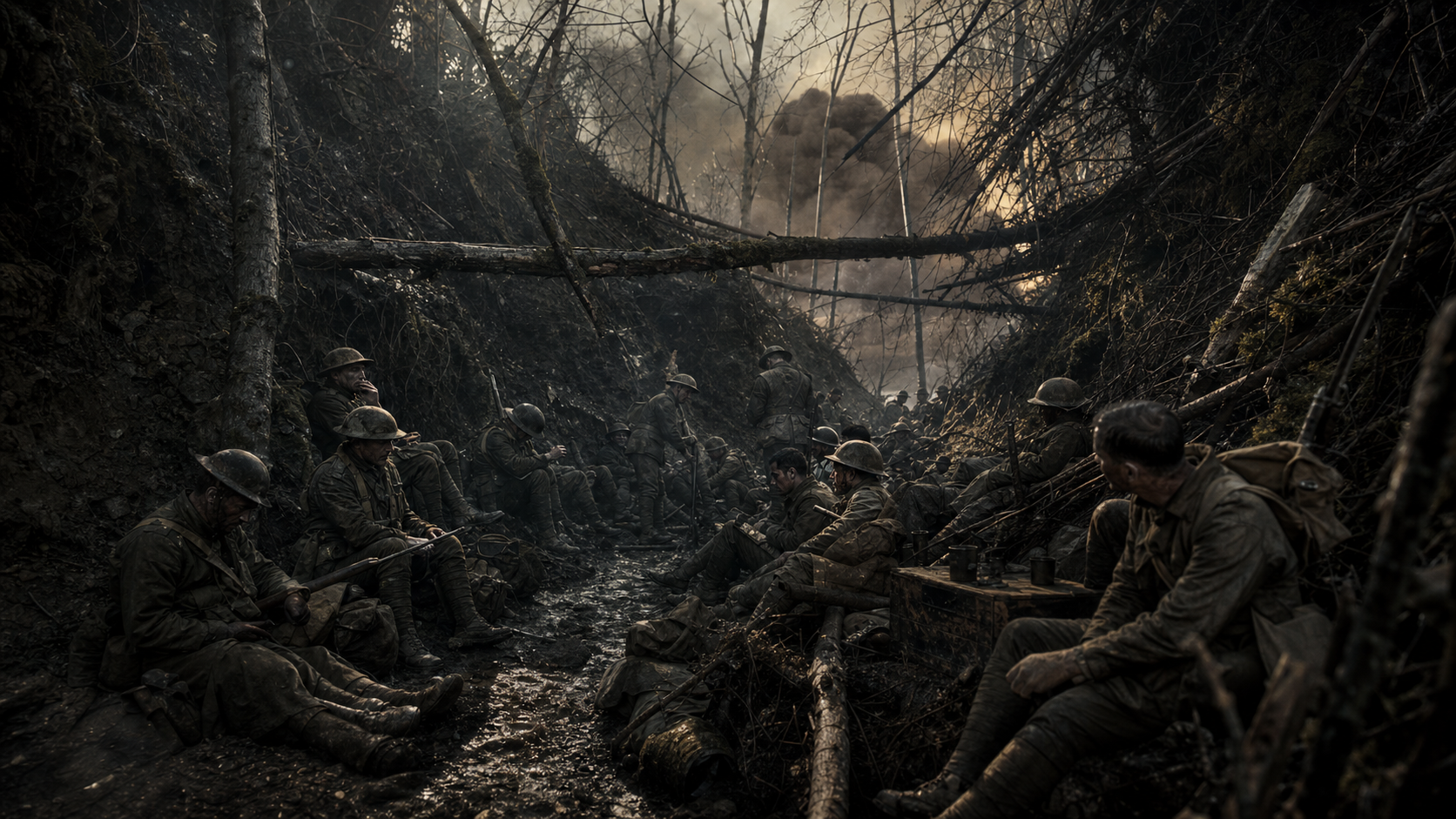
The men later called the Lost Battalion entered the Argonne during the largest American operation of World War I. The Meuse-Argonne Offensive had begun on September 26, 1918, with the U.S. First Army pushing through terrain the Germans had fortified for years. Roads choked, artillery schedules slipped, runners disappeared, and units lost contact in woods that broke formations apart.
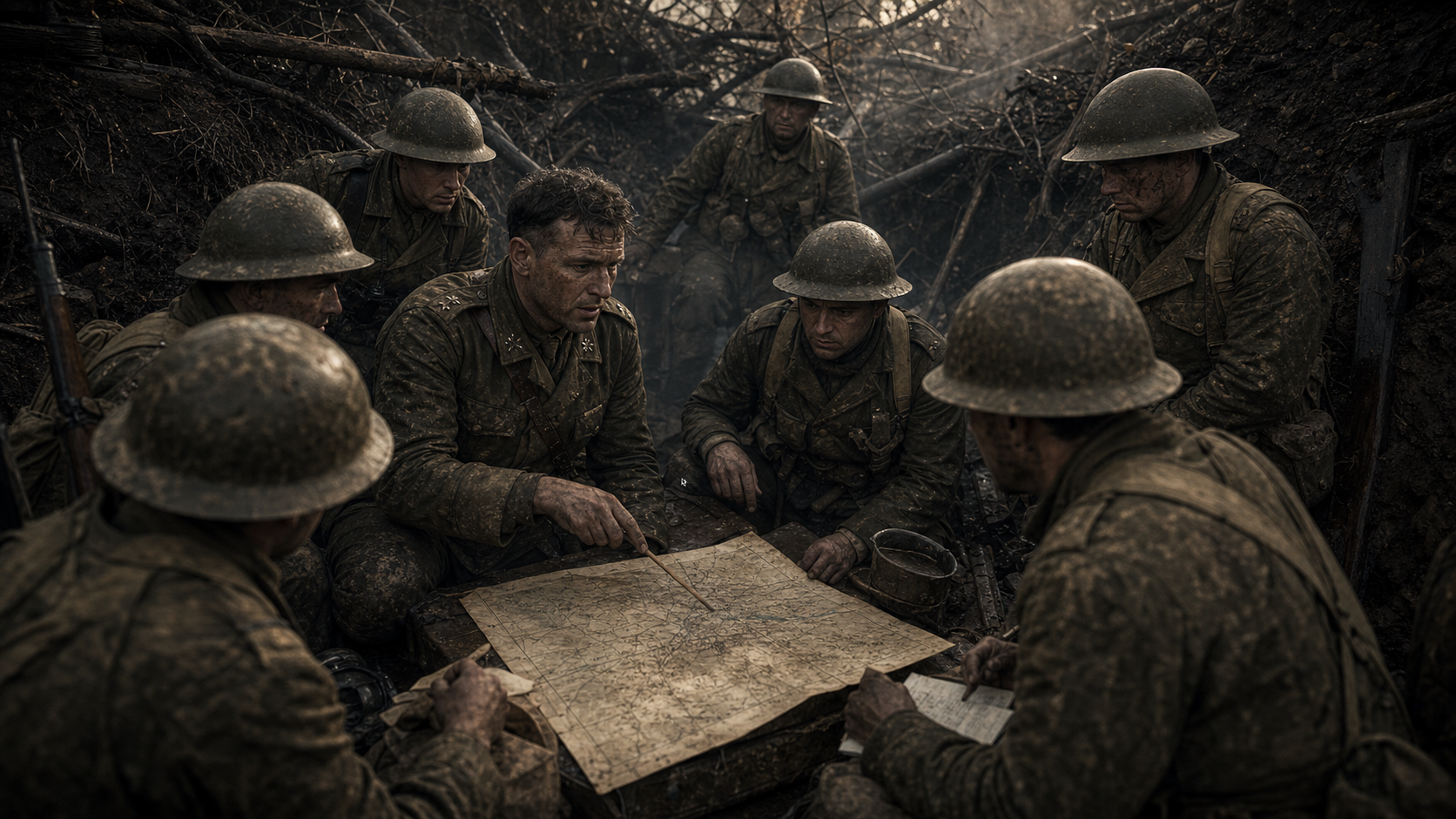
On October 2, Major Charles W. Whittlesey led elements of the 308th Infantry forward near Binarville. The orders were severe: advance, maintain direction, and do not halt merely because units on the flanks had fallen behind. Whittlesey's men pushed through. Neighboring formations did not keep pace. Their success became their trap.
Chapter 02
By nightfall, the Americans held a position in Charlevaux Ravine, a narrow wooded pocket ahead of the main American line. German troops moved back onto the high ground behind and around them. The ravine that offered cover became a bowl. The nickname came later. They were not truly lost; Whittlesey knew roughly where he was, and the Germans knew well enough too. The problem was isolation.
Survival shrank to essentials. Men dug into the slope with entrenching tools, bayonets, and bare hands. Wounded men lay where stretcher bearers could not safely reach them. Water was scarce. Food disappeared. Medical supplies ran out. German fire came from multiple sides, making every movement a calculation.
Visual breakdown
The ravine could not be solved by courage alone. It needed communication, and sometimes that meant a pigeon carrying coordinates through gunfire.
Chapter 03
Then came one of the cruelest moments of the siege. American artillery, working from mistaken coordinates and uncertain observation, began falling on Whittlesey's own men. The pocket was already under German fire; now shells from their own side were tearing into the position.
Whittlesey sent messages by runner and carrier pigeon asking that the barrage stop. The famous pigeon Cher Ami became attached to the story because communication from the ravine was that fragile: a message capsule, a bird, gunfire through branches, and men below waiting to learn whether their own guns would stop.
Chapter 04
Aircraft tried to help as well. Low-flying crews searched for the Americans under the trees, where smoke, branches, and German fire made certainty nearly impossible. Supplies were dropped, but many fell outside reach. Lieutenant Harold Goettler and Lieutenant Erwin Bleckley of the 50th Aero Squadron made repeated passes through ground fire to locate the trapped men and assist resupply. Their aircraft was shot down and both men died.
The Germans understood the value of the surrounded Americans. They attacked with rifles, machine guns, trench mortars, and flamethrowers. They also tried persuasion, sending a surrender demand through a captured American. Whittlesey did not surrender. The answer, whether by words or refusal, was no.
Chapter 05
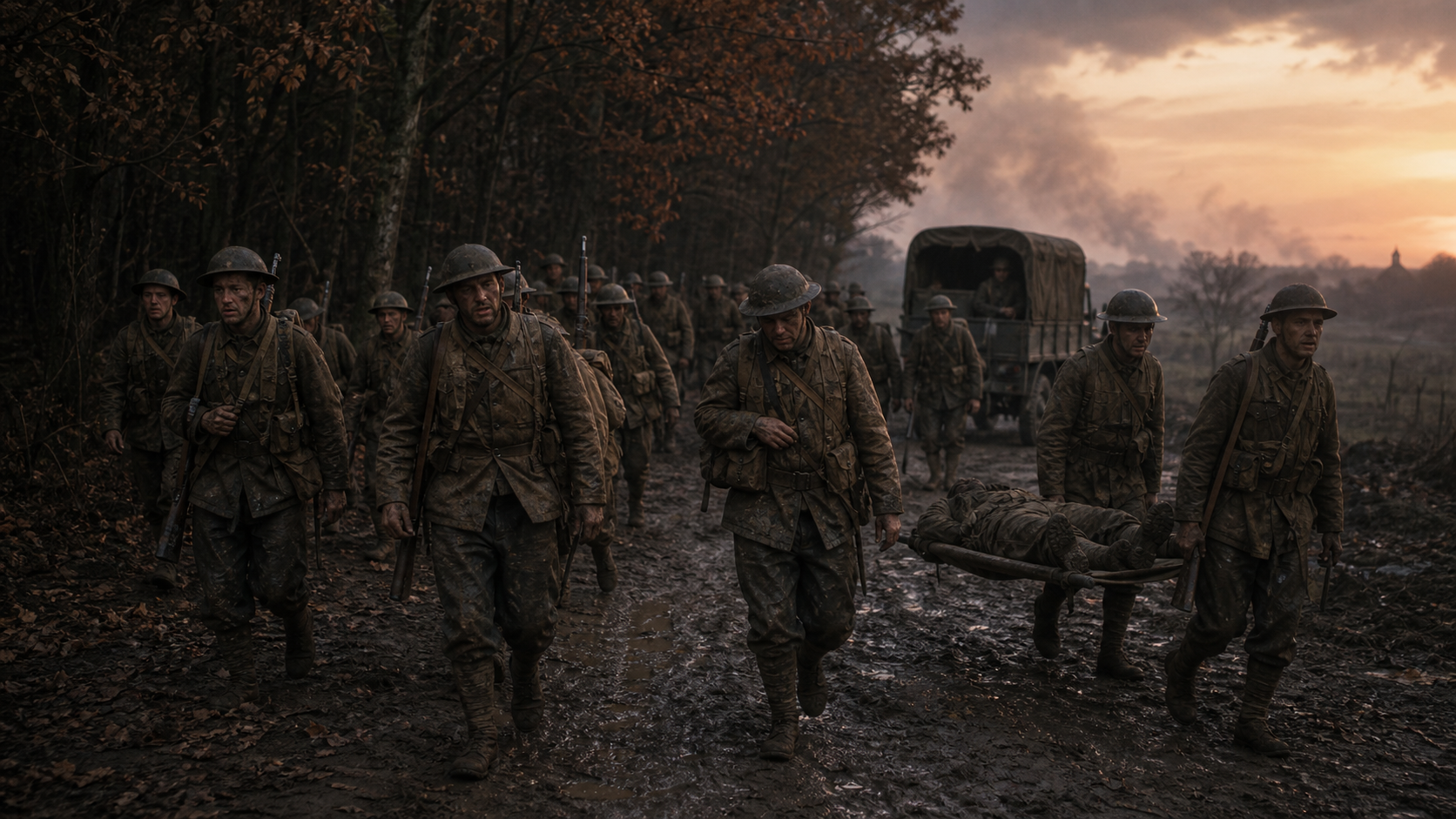
By October 7 and 8, American pressure finally reached the pocket. The survivors came out of the ravine muddy, hungry, thirsty, and carrying the weight of the men who could not walk with them. Accounts vary by how the force is counted, but only about 190 men were able to walk out under their own power.
The Lost Battalion endures because it compresses the First World War into one ravine: modern firepower and old courage, confused maps and absolute orders, aircraft overhead and pigeons in the hand, newspaper legend and physical misery. The name is tactically imprecise. It is emotionally exact.
Closer look
Two parts of the Lost Battalion story deserve more weight than a quick summary usually gives them. First, Whittlesey's command problem was not merely bravery under pressure; it was decision-making in a place where every normal military tool had degraded. Runners were disappearing, maps were uncertain, artillery was dangerous, and the enemy controlled the heights.
Second, relief was not a parade. The survivors who came out of the ravine did not look like a poster version of victory. They were the remainder of a mixed force that had been hungry, thirsty, shelled, surrounded, and asked to keep functioning after ordinary limits of endurance should have ended the story.
Timeline
Related WWI Stories
Source basis
Built from public-history and museum references, with cinematic narration kept tied to documented events and careful uncertainty where the record is contested.