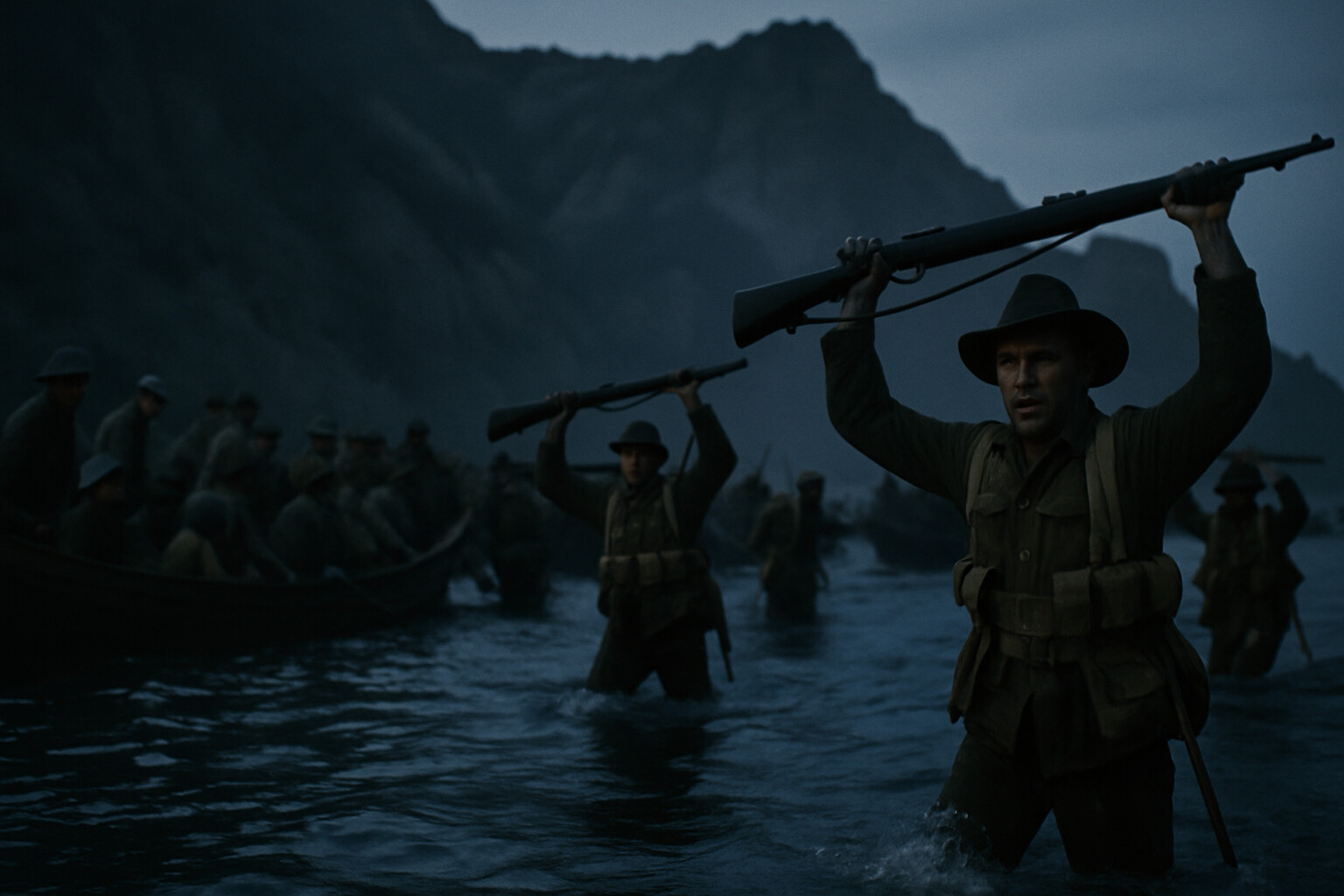
Visual breakdown
The Mark IV problem-solver
Rhomboid hull, long tracks, sponson weapons, and fascines were all answers to trenches and wire, but the machine was still crude and fragile.
World War I - Armor - November 1917
The morning the wire failed
Battle of Cambrai 1917: British Mark IV tanks, surprise, crushed wire, mechanical limits, and the German counterattack.
Chapter 01
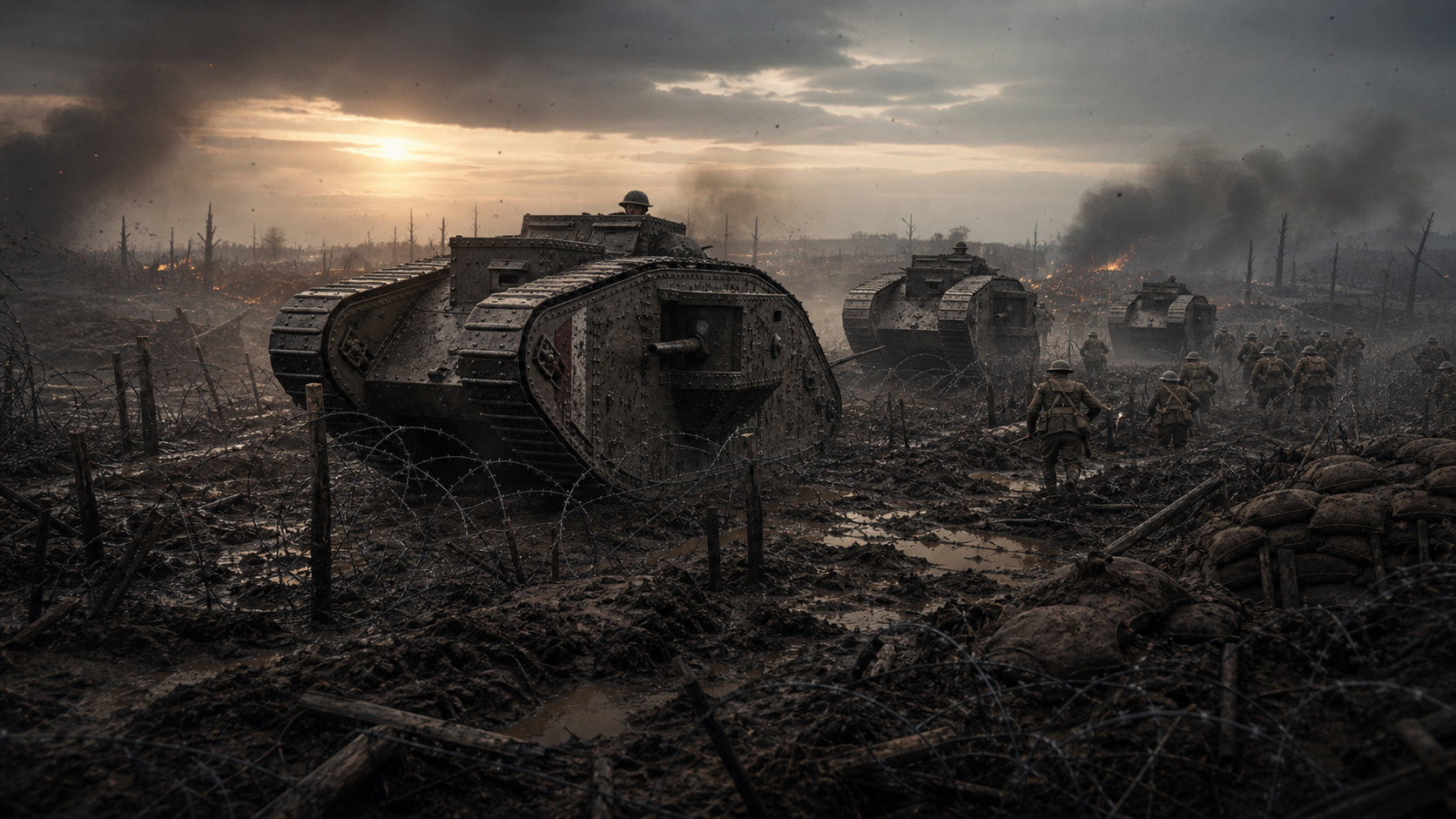
At 6:20 on November 20, 1917, the ground near Cambrai began to move. There had been no long warning bombardment, no days of shells announcing where the next slaughter would come. British guns opened suddenly with calculated fire, and out of the mist came Mark IV tanks.
They were not graceful or fast. Their crews worked in choking heat, fumes, and noise. But on that morning they did something infantry had dreamed of for three years. They went through the wire.
Chapter 02
Cambrai was chosen because the ground offered a rare chance. Much of the Western Front had been churned into shell craters where early tanks drowned. Around Cambrai, the terrain was firmer. The German defenses were formidable, but the surface itself was passable enough for armor.
The British plan depended on surprise. The guns would be registered by calculation rather than visible trial fire. The tanks would cut wire. Infantry would follow close behind. Aircraft, artillery, engineers, cavalry, and tanks were meant to act together in a new kind of assault.
Visual breakdown
Rhomboid hull, long tracks, sponson weapons, and fascines were all answers to trenches and wire, but the machine was still crude and fragile.
Chapter 03
The first hours were astonishing. British troops broke into German positions with speed rare by Western Front standards. Machine-gun posts that might have made open ground fatal suddenly found steel shapes looming through smoke.
But breaking in was not the same as breaking through. Some tanks ditched in trenches. Some failed mechanically. Some were hit by German field guns brought into direct fire. At Flesquieres and Bourlon Ridge, momentum leaked away hour by hour.
Chapter 04
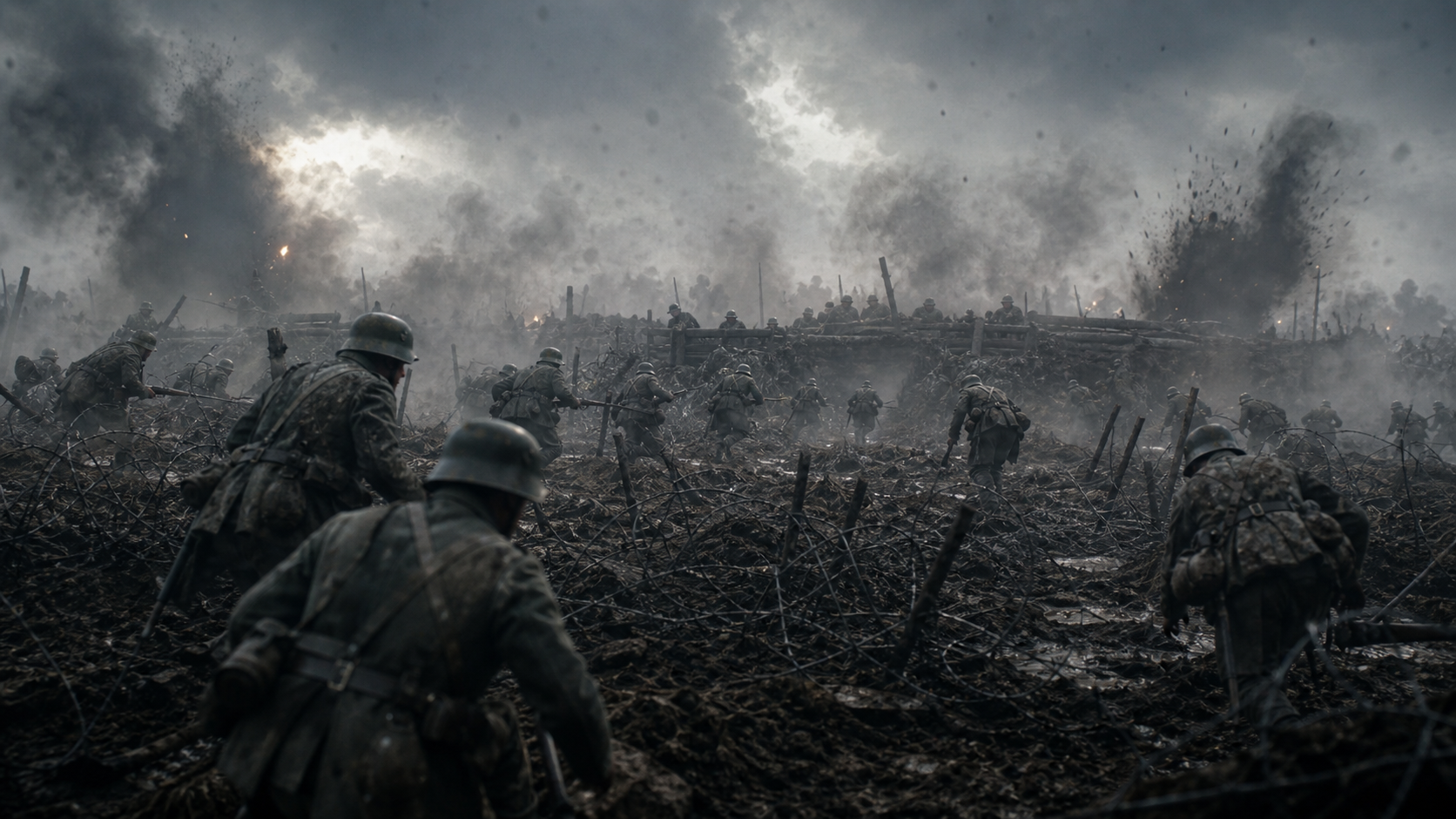
On November 30, the German answer came. It was not simply an old-style shove. German forces used artillery, mortars, gas, and infiltration tactics. Storm troops pushed through weak points and disrupted British rear areas.
The same battle that showcased the future of armored attack also revealed the future of flexible infantry assault. By early December, Cambrai had become something more complicated than victory or defeat.
Chapter 05
Cambrai proved tanks could rupture trench defenses when massed, coordinated, and given suitable ground. It also proved armor alone could not win. Tanks needed fuel, ammunition, repairs, reserves, infantry, artillery, and a system able to exploit success before the enemy recovered.
The image remains: Mark IVs nosing through mist, tracks crushing wire, infantry behind them, the Hindenburg Line opening where it was supposed to hold. Then the second image: stalled machines, exhausted crews, and the hard lesson that invention changes war but does not make it easy.
Closer look
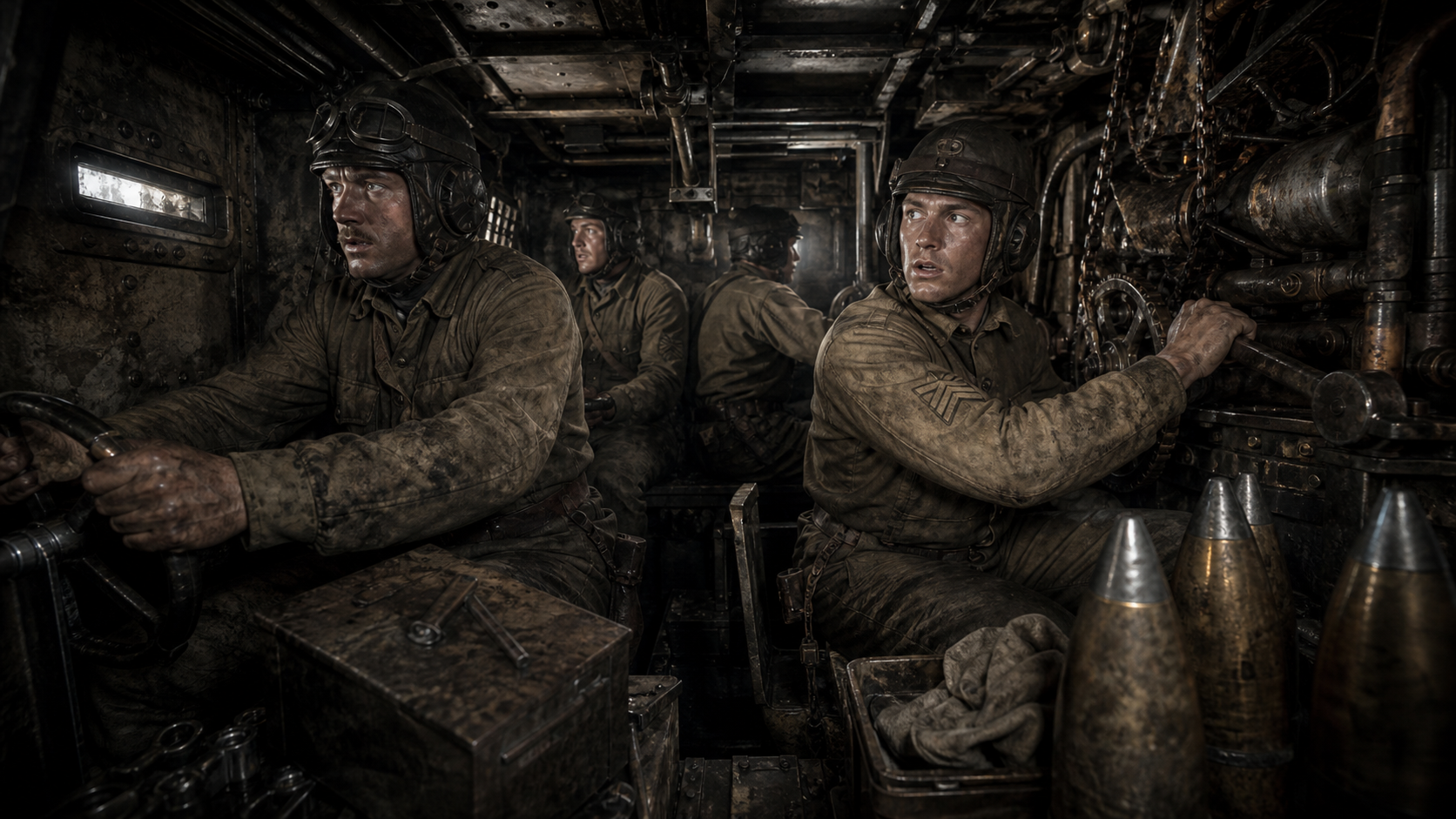
From the outside, the Mark IV looked like the answer to barbed wire. From the inside, it was a punishing workspace. Crews fought heat, fumes, engine noise, poor visibility, violent movement, and mechanical failure while trying to keep pace with infantry and artillery plans that depended on timing.
Cambrai's second lesson came when the Germans recovered. The counterattack showed that the enemy was adapting too. Tanks could open a door, but the army behind them still had to hold the room, bring up reserves, repair machines, feed the advance, and survive a modern counterstroke built around artillery, gas, and infiltration.
Timeline
Related WWI Stories
Source basis
Built from public-history and museum references, with cinematic narration kept tied to documented events and careful uncertainty where the record is contested.